
Share a Living Room When the Activities Are Different
Agree how different activities can share a living room through timing and preferences, keeping one person’s quiet pause from becoming another’s unspoken restriction.
Shopping disclosure: links within this story are ordinary retailer links. Separately identified advertisements elsewhere on the page may contain affiliate links. Our full disclosure.

A living room can host different activities when the people using it understand the timing and the kind of attention each wants. One person may be reading while another hopes to watch something or work on a small project. Discuss the actual overlap instead of letting the first activity quietly claim the whole room. The useful arrangement makes both people's choices visible without requiring identical interests.
Name the activities rather than the mood
Explain what you intend to do and which part matters. Quiet reading, a conversation and background viewing have different requirements. Saying that you only want a relaxing evening may leave the practical difference unexplained.
Ask the other person what they want from the same period. Keep their answer at its actual level rather than interpreting a preference for quiet as rejection of company or a wish for sound as lack of consideration. The question is how these activities fit this room now.
Identify the part that cannot overlap
Look at sound, shared surfaces, equipment and the ordinary routes through the room. Some uses may sit together comfortably, while others need a different time or setting. Do not assume a personal device or accessory automatically resolves every practical or privacy requirement.
Keep important individual needs and product use on an appropriate basis. If a requirement cannot be established, choose another suitable arrangement rather than asking someone to tolerate an unresolved problem. A shared room needs actual agreement, not a theory about what ought to be manageable.
Agree on a modest period
Choose whether to alternate, use another appropriate space or simplify one activity. State the endpoint clearly enough that the other person knows when the room returns to its ordinary shared role. A temporary accommodation is easier to accept when it does not become an indefinite condition.
The reading corner guide considers a personal activity within a room that already has several uses. A reading place can be useful without giving its occupant permanent control of the whole space.
Keep belongings and surfaces understandable
Use the actual furniture and equipment appropriately, leaving private items under their owner's control. A temporary project should have a manageable place for its materials and a clear finish. Avoid spreading the activity across every surface simply because another person has agreed to be quiet for a while.
The desk notebook closing guide offers one small way to leave the next action clear when a task pauses. Finishing an activity includes returning the shared setup, not only stopping the most visible part of the work.
If the arrangement needs to change, say so directly instead of communicating through louder sound or repeated interruptions. A clear update can reopen the practical question without turning the evening into an argument about whose interest matters more.
Afterwards, notice one thing that helped and keep the next agreement equally modest. The room does not need a permanent rule for every possible pairing of activities. It has worked when both people understood the period, the limits and the next step, leaving the shared space genuinely shared again when the arrangement ended.
A little more to adore

Give Bedside Glasses a Suitable Case and a Clear Place
Give bedside glasses an appropriate case, specific care, stable clear placement, comfortable access, separate belongings, and a complete morning handover.
Read the story →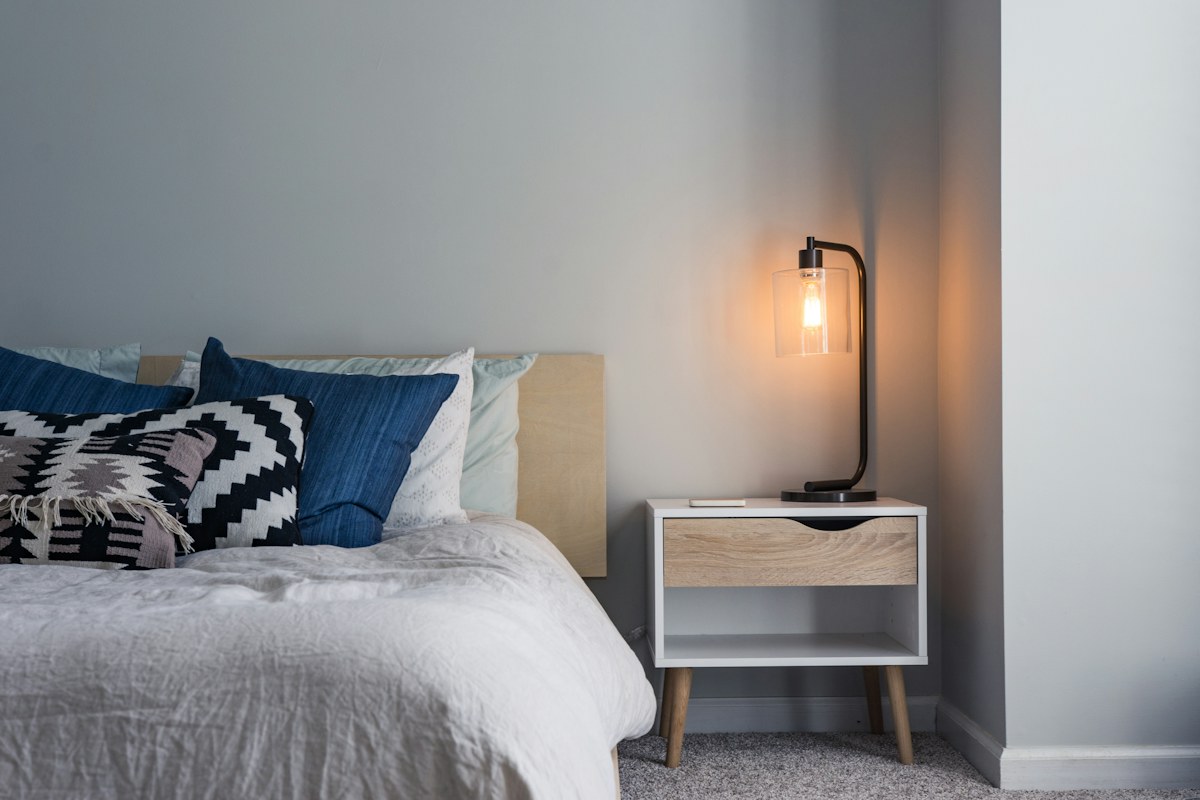
Choose a Bedside Lamp Through Switch Reach
A bedside lamp is easier to choose when its switch can be reached through the way the bed is actually used. A photograph of a lamp on a table says little about that ordinary m
Read the story →